With next week's marking of the 32nd anniversary of the American pullout of Vietnam—which precipitated the Fall of Saigon—we have a very opportune moment to reflect on the recent (and ongoing) calls to pull American troops our of Iraq. This question is made particularly apropos by the current showdown between President Bush and congress over the inclusion of a troop-withdraw time line in the new war-funding bill. The President has threatened a veto, and Democrats in neither chamber have the votes to override such a move.
Though this opinion will be very unpopular among readers (and among the general US population more broadly), I do not think troop withdraw anytime in the imminent future is a feasible or moral plan. I listen to the news, which is filled with daily reports of our soldiers being slaughtered for a very unpopular war. I imagine that the grief felt by their family and friends is unimaginable. I am saddened and angered by the loss of life in young men and women who carried so much promise for their cities, for their nation, and for the world.
But I also understand that as a nation we entered this war unbidden by the people of Iraq, and our tearing down of their old political and social system uninvited and leaving before a new stable system is in place is shameful and selfish. This moment appears to be a moment ripe for gloating for those who opposed the war from its inception. It's appears to be a wonderful "I told you so," moment. But that sentiment is neither helpful nor appropriate: as a people living under a democracy, we are all responsible for the decisions of government. When a new law is passed, the majority in favor and the minority opposed to it are both equally obligated to abide by it. So now the evil, cumbrous burden of funding the war falls on all our shoulders, but the burden of actually fighting the war falls to only a few.
Which teaches all of us the lesson that we must be very, very certain about the reasons for and nature and likely duration of a conflict before asking those few to take up arms and imperil their lives for the rest of us.
The cliché goes, "fool me once, shame on you; fool me twice, shame on me." The American public was (arguably) duped into the Vietnam War by the fear of Communism's steady march across the globe, which, in truth, was a reasonable threat at the time to American-style democracy. Eventually the toll exacted in American casualties proved too great to justify a battle that seemed largely ideological, and mounting political pressure forced the Washington bureaucrats to bring home the troops.
A rough (but certainly imperfect) parallel can be drawn to the situation in Iraq. Which leads me to ask: was the American public duped again into another fruitless and ideologically driven war? And likewise:"who is to blame for the mess in Iraq?" But the American public who lived through the Vietnam era is not the same American public of today. My generation, in particular, was not alive during the days of Nixon and LBJ, let alone Eisenhower or Kennedy. The lessons of Vietnam are from history books, not historical memory.
I am not trying to shirk our responsibility in this mess, but rather using this opportunity to ask whether we were poor students of our fathers' lessons, or whether they were bad teachers. Said one friend recently, "we were poor students. And one person in particular is at fault for not listening to his father—or his father's advisers."
I can only hope this will not only strengthen our own resolve to prevent the scourge of war in this lifetime, but to redouble our efforts to impart that lesson onto our children and grandchildren to guide them in their lifetimes as well.
Monday, April 23, 2007

Friday, April 20, 2007
Political Prognostication: 2008 Presidentials
I was totally right about the 2006 midterm results, and I called it a full year ahead of the elections. Unfortunately, in my reality show-viewing enthusiasm, I forgot to document it. We all know I love being right and gloating, so this time I'll be more careful.
My money is on Hilary as the Democratic contender, and John McCain as the Republican candidate [Actually, I'm a little uncertain about whom the GOP will nominate. McCain is just so very ancient, but Mr. Giuliani is simply not conservative enough to get win the party's right.] But that's just speculation. My gaze into the crystal ball isn't clear enough to prognosticate the details, but I can see a clear Democratic victory.
The Bush II administration is just too fraught with problems. It's just one scandal after another. (Please, George, get it together already.)
Paul Wolfawitz is going to resign from the World Bank after being embroiled in the pay-raise-for-girlfriend scandal, mixed with lack of confidence from Bank staffers. Alberto Gonzales will eventually need to resign from his post as Attorney General, and Karl Rove's fingerprints are all over this mess, just as in the not-too-distant Valerie Plame/Joseph Wilson/Karl Rove/Lewis Scooter Libby/Dick Cheney/Richard Armitage/Robert Novak/Judith Miller affair, (often shortened for convenience to "the Plame affair" or simply "Plamegate," because, honestly, who can remember all those names or the connections between them?) (But don't you think that calling it "Plamegate" denies credit where it's due, and leaves out so many of the central figures in that sad, sad tale of misuse and abuse of power?)
Now it's possible that I'm more keenly aware of the rash of resignations/calls for resignation because it's only been since Bush43 took office that I began listening to NPR, which commenced my interest in national politics . Prior to that period, my interest in the news centered mainly on international affairs.
Anyway, I'm calling it now: a Democratic win in 2008. You heard it here first. Spread the word.
My money is on Hilary as the Democratic contender, and John McCain as the Republican candidate [Actually, I'm a little uncertain about whom the GOP will nominate. McCain is just so very ancient, but Mr. Giuliani is simply not conservative enough to get win the party's right.] But that's just speculation. My gaze into the crystal ball isn't clear enough to prognosticate the details, but I can see a clear Democratic victory.
The Bush II administration is just too fraught with problems. It's just one scandal after another. (Please, George, get it together already.)
Paul Wolfawitz is going to resign from the World Bank after being embroiled in the pay-raise-for-girlfriend scandal, mixed with lack of confidence from Bank staffers. Alberto Gonzales will eventually need to resign from his post as Attorney General, and Karl Rove's fingerprints are all over this mess, just as in the not-too-distant Valerie Plame/Joseph Wilson/Karl Rove/Lewis Scooter Libby/Dick Cheney/Richard Armitage/Robert Novak/Judith Miller affair, (often shortened for convenience to "the Plame affair" or simply "Plamegate," because, honestly, who can remember all those names or the connections between them?) (But don't you think that calling it "Plamegate" denies credit where it's due, and leaves out so many of the central figures in that sad, sad tale of misuse and abuse of power?)
Now it's possible that I'm more keenly aware of the rash of resignations/calls for resignation because it's only been since Bush43 took office that I began listening to NPR, which commenced my interest in national politics . Prior to that period, my interest in the news centered mainly on international affairs.
Anyway, I'm calling it now: a Democratic win in 2008. You heard it here first. Spread the word.
Wednesday, April 18, 2007
t(-.-t) Productions
I noticed lately the tenor of myteemingbrain has been toward the serious (excepting, of course, the digressions into the on-goings of American Idol). Since I'm about a month behind on my blog, I can see into the future, and the next two posts will likewise be of a somber/political nature*.
So, to give everyone a little reprieve from all the politics, here is a sampling of videos I found a few days ago on the 'Tube. As a caveat: though the production company, TnT Productions, has quickly become my favorite producer of silly video clips, not everyone has the acumen to perceive the comic genius underlying these creations. For example, I spent what seemed like an eternity trying to convince one friend why the videos are so great, but it's like trying to explain why a Rembrandt is glorious, or why Chopin's Prelude No.15 in Db major is stunning. These are not matters open to interpretation. These are not personal opinions. They are observable facts, and the only people who disagree with them are those who lack the capacity to appreciate them. [Okay, on a serious note: I can't compare the comic "genius" of these videos two those two other artists and their work, but I think the point is made.] After trying vainly to render the ineffable into words, I concluded the disagreement with an amicable "everyone has his own opinion," while in my mind concluding the sentence with "...even philistines."
Alright, even though I just conceded that the source of humor in these Youtube offerings is "ineffable," I can't resist trying to tell you why I enjoy them. Look at the expressions on that kid's face. Sure, his facials are sometimes little over-the-top—and probably more than a little camera-conscious—but there are also moments (and plenty of them) in which his silly and/or ridiculous expressions look entirely natural. [NB: Readers who have interacted with me in person will know that my face often finds itself doing similar contortions. If you're a stranger reading this, you'll have to take my word for it.] Something about the dichotomy of a natural-seeming countenance that is clearly artificially induced for the purpose of a lip synch video is interesting. I also enjoy the use of makeshift props (not so apparent in the videos below, but if you click here you can find the whole selection). Nothing spectacular about the use of the props, but the fact that they seem so whimsically chosen (i.e. "let's see what I have lying around my room, and figure out a way to use it in this video,") is amusing.
Finally, the syntactical gymnastics at the end of the last video (in the segment entitled "Bloopies") will be appreciated by anyone who has an interest in grammar and the way that we put sentences together.
If you don't like these, I won't apologize.
"Accidentally in Love," Counting Crows [My favorite, because of the "bloopies."]
"Build me up, Buttercup," the Foundations
"Charmander evolves to Charmeleon"
*I attribute this sudden barrage of political musings to my recent re-exposure to NPR, and all the delectable national and international news delights that it offers. I am gorging myself on the free exchange of information after being starved of uncensored material in the PRC.
So, to give everyone a little reprieve from all the politics, here is a sampling of videos I found a few days ago on the 'Tube. As a caveat: though the production company, TnT Productions, has quickly become my favorite producer of silly video clips, not everyone has the acumen to perceive the comic genius underlying these creations. For example, I spent what seemed like an eternity trying to convince one friend why the videos are so great, but it's like trying to explain why a Rembrandt is glorious, or why Chopin's Prelude No.15 in Db major is stunning. These are not matters open to interpretation. These are not personal opinions. They are observable facts, and the only people who disagree with them are those who lack the capacity to appreciate them. [Okay, on a serious note: I can't compare the comic "genius" of these videos two those two other artists and their work, but I think the point is made.] After trying vainly to render the ineffable into words, I concluded the disagreement with an amicable "everyone has his own opinion," while in my mind concluding the sentence with "...even philistines."
Alright, even though I just conceded that the source of humor in these Youtube offerings is "ineffable," I can't resist trying to tell you why I enjoy them. Look at the expressions on that kid's face. Sure, his facials are sometimes little over-the-top—and probably more than a little camera-conscious—but there are also moments (and plenty of them) in which his silly and/or ridiculous expressions look entirely natural. [NB: Readers who have interacted with me in person will know that my face often finds itself doing similar contortions. If you're a stranger reading this, you'll have to take my word for it.] Something about the dichotomy of a natural-seeming countenance that is clearly artificially induced for the purpose of a lip synch video is interesting. I also enjoy the use of makeshift props (not so apparent in the videos below, but if you click here you can find the whole selection). Nothing spectacular about the use of the props, but the fact that they seem so whimsically chosen (i.e. "let's see what I have lying around my room, and figure out a way to use it in this video,") is amusing.
Finally, the syntactical gymnastics at the end of the last video (in the segment entitled "Bloopies") will be appreciated by anyone who has an interest in grammar and the way that we put sentences together.
If you don't like these, I won't apologize.
"Accidentally in Love," Counting Crows [My favorite, because of the "bloopies."]
"Build me up, Buttercup," the Foundations
"Charmander evolves to Charmeleon"
*I attribute this sudden barrage of political musings to my recent re-exposure to NPR, and all the delectable national and international news delights that it offers. I am gorging myself on the free exchange of information after being starved of uncensored material in the PRC.
Friday, April 13, 2007
Don of a New Day
So where is the ACLU on the controversy surrounding Don Imus?* Usually so outspoken about matters of constitutionality in which it seems the public has erred, the ACLU has remained loudly reticent in this particular debate. Apparently encroaching on the first amendment right to free speech is not worth the ACLU's attention, but God forbid anyone should try to enforce section of that same amendment that protects the "free exercise" of religion. I guess the ACLU was too busy trying to eliminate prayer in schools to help defend Mr. Imus.
[Since it's probably not entirely clear here: I'm not at all against civil liberties, since my being able to blog so freely on a number of topics depends entirely on the privileges granted to us in our divinely wise Constitution. I do take issue with the politicized way the ACLU seems to selectively promote the application of "liberty" for certain (read: left-leaning) groups or for pet causes (read: issues on the Democratic agenda), but not in others. I have no actual "hard" statistics comparing cases in which the ACLU has supported or represented conservative litigants versus liberal litigants. I have, however, noticed that every time I hear of the ACLU involving itself in a matter, or speaking out on behalf of a group, the Union has never fallen on the side of the line I supported. Incidentally, I recently received mail from them inviting me to some fundraising dinner. How they got my mailing information—or why in the world they thought I would give them anything other than a very severe scowl and a mini-tirade such as that featured above—is, to me, a mystery of the universe.]
Actually, I'm pretty conflicted about this whole affair. Normally, I am all for decorum, politeness, etiquette, and the preservation of civility in modern society, and referring to anyone as a "nappy-headed ho" (especially on air, to national audience) is certainly outside the bounds of common decency.
Nonetheless, I also think we need to protect the freedom of speech. Doubtless Imus's comments were frivolous, mean-spirited, rude, racist, misogynist, &c, &c, but can we then ask people who are offended not to listen? I don't think sponsors pulled their ads because ratings suddenly dropped. In fact, (though, again, I have no hard data to substantiate this speculation) I'm willing to bet that after his nappy-headed gaff in which Imus's show was brought to the fore of American consciousness, millions who had never heard of Don Imus recognized his name, and many likely tuned in. I don't think rating numbers were out fast enough to determine that his stock had plummeted. I think advertisers were just scared of the backlash...and not even necessarily a genuine, certifiable downturn in sales, because I'm fairly confident that (sadly) most Americans are so apathetic that they just would continue buying the same brand of toothpaste, laundry detergent, saltine crackers and indexed mutual funds as before. Whatever is cheapest and most convenient. Whatever is on sale at WalMart or is being offered economy-sized in the Costco coupon book.
Granted, the type of comment that Imus made on his radio show perpetuate the prejudices that for many decades hijacked the machinery of democracy (namely the power of the majority to impose its will upon dissenting groups) for deplorably undemocratic aims. And while I do think we need to value the constitutional right to speak freely, I also recognize that there exists (at least in the mind of many Americans) the right to live free from being called a nappy-headed ho. How do we balance this? Even though Imus was not censored by the government, he was effectively silenced and his right to voice his opinions (however repugnant they might have struck most listeners) quashed by his firing. Of course the greater concern is not this particular case, but the implications this instance has on broadcast freedoms more broadly understood. Can we take anyone off the air from saying things we find offensive? What about things with which we simply disagree? Will this frighten and deter others from saying exactly what they think on air?
Incidentally, this is the same sort of thing we saw with the O.J. Simpson book deal (his book If I Did It), in which popular opposition was so strong that Rupert Murdock was forced to can the deal. (Click here if you're not familiar with that brouhaha.)
What do you, readers, think about this sort of censorship by the masses? We can see how in theory it's vastly different from governmental censorship, but in practice, aren't the effects the same (e.g. silencing the voices of those whose opinions Power dislikes, and preventing a free exchange of ideas)? If we become a nation that no longer values the right to free expression (even offensive, hateful expression), then isn't it logical to conclude that at some point we wouldn't care if the government did begin censoring, because we'd already be doing it to ourselves?
Is this because he's a white man referring to black women? What if it had been a black woman talking about a white man, say, Oprah referring to Steve Nash as a "balding white cracker"? Or, what if it had been Queen Oprah calling the Rutgers women's team nappy-headed ho's? I'm sure there would be press coverage of blacks perpetrating hateful attitudes against their own kind, but I doubt that the offender would have lost her job. Can we tolerate this two-tiered standard if we really want to live in a society in which race exists, yet without creating hypocracy and a double standard? In the wake of the Imus comments, much has been made about rap—a musical form dominated by black males—and the attitudes the artists of that genre perpetuate by reguarly using lyrics as incidious as those for which Imus was canned. Doesn't every race have the right to turn a profit off hate speech?
As the profusion of interrogatives above indicates, I am still very, very unsettled on the matter of where the "rights" and "wrongs" fall in this case. All I know for sure is that I am not attending that ACLU fundraiser.
*If you've been living in complete seclusion for the past week and aren't sure what the Imus controversy is, click here for some cultural currency.
[Since it's probably not entirely clear here: I'm not at all against civil liberties, since my being able to blog so freely on a number of topics depends entirely on the privileges granted to us in our divinely wise Constitution. I do take issue with the politicized way the ACLU seems to selectively promote the application of "liberty" for certain (read: left-leaning) groups or for pet causes (read: issues on the Democratic agenda), but not in others. I have no actual "hard" statistics comparing cases in which the ACLU has supported or represented conservative litigants versus liberal litigants. I have, however, noticed that every time I hear of the ACLU involving itself in a matter, or speaking out on behalf of a group, the Union has never fallen on the side of the line I supported. Incidentally, I recently received mail from them inviting me to some fundraising dinner. How they got my mailing information—or why in the world they thought I would give them anything other than a very severe scowl and a mini-tirade such as that featured above—is, to me, a mystery of the universe.]
Actually, I'm pretty conflicted about this whole affair. Normally, I am all for decorum, politeness, etiquette, and the preservation of civility in modern society, and referring to anyone as a "nappy-headed ho" (especially on air, to national audience) is certainly outside the bounds of common decency.
Nonetheless, I also think we need to protect the freedom of speech. Doubtless Imus's comments were frivolous, mean-spirited, rude, racist, misogynist, &c, &c, but can we then ask people who are offended not to listen? I don't think sponsors pulled their ads because ratings suddenly dropped. In fact, (though, again, I have no hard data to substantiate this speculation) I'm willing to bet that after his nappy-headed gaff in which Imus's show was brought to the fore of American consciousness, millions who had never heard of Don Imus recognized his name, and many likely tuned in. I don't think rating numbers were out fast enough to determine that his stock had plummeted. I think advertisers were just scared of the backlash...and not even necessarily a genuine, certifiable downturn in sales, because I'm fairly confident that (sadly) most Americans are so apathetic that they just would continue buying the same brand of toothpaste, laundry detergent, saltine crackers and indexed mutual funds as before. Whatever is cheapest and most convenient. Whatever is on sale at WalMart or is being offered economy-sized in the Costco coupon book.
Granted, the type of comment that Imus made on his radio show perpetuate the prejudices that for many decades hijacked the machinery of democracy (namely the power of the majority to impose its will upon dissenting groups) for deplorably undemocratic aims. And while I do think we need to value the constitutional right to speak freely, I also recognize that there exists (at least in the mind of many Americans) the right to live free from being called a nappy-headed ho. How do we balance this? Even though Imus was not censored by the government, he was effectively silenced and his right to voice his opinions (however repugnant they might have struck most listeners) quashed by his firing. Of course the greater concern is not this particular case, but the implications this instance has on broadcast freedoms more broadly understood. Can we take anyone off the air from saying things we find offensive? What about things with which we simply disagree? Will this frighten and deter others from saying exactly what they think on air?
Incidentally, this is the same sort of thing we saw with the O.J. Simpson book deal (his book If I Did It), in which popular opposition was so strong that Rupert Murdock was forced to can the deal. (Click here if you're not familiar with that brouhaha.)
What do you, readers, think about this sort of censorship by the masses? We can see how in theory it's vastly different from governmental censorship, but in practice, aren't the effects the same (e.g. silencing the voices of those whose opinions Power dislikes, and preventing a free exchange of ideas)? If we become a nation that no longer values the right to free expression (even offensive, hateful expression), then isn't it logical to conclude that at some point we wouldn't care if the government did begin censoring, because we'd already be doing it to ourselves?
Is this because he's a white man referring to black women? What if it had been a black woman talking about a white man, say, Oprah referring to Steve Nash as a "balding white cracker"? Or, what if it had been Queen Oprah calling the Rutgers women's team nappy-headed ho's? I'm sure there would be press coverage of blacks perpetrating hateful attitudes against their own kind, but I doubt that the offender would have lost her job. Can we tolerate this two-tiered standard if we really want to live in a society in which race exists, yet without creating hypocracy and a double standard? In the wake of the Imus comments, much has been made about rap—a musical form dominated by black males—and the attitudes the artists of that genre perpetuate by reguarly using lyrics as incidious as those for which Imus was canned. Doesn't every race have the right to turn a profit off hate speech?
As the profusion of interrogatives above indicates, I am still very, very unsettled on the matter of where the "rights" and "wrongs" fall in this case. All I know for sure is that I am not attending that ACLU fundraiser.
*If you've been living in complete seclusion for the past week and aren't sure what the Imus controversy is, click here for some cultural currency.
Thursday, April 12, 2007
Sanjayaed
 This week Sanjaya has managed to turn my usually self-assured, self-confident self upside down. Even the normally rock-solid refuge of my incontrovertible opinions has been pillaged and reduced to sinking sand. Sanjaya was...actually good this week, right? Someone please give me affirmation that my ears didn't unilaterally declare April 10 "opposite day." Either that, or confirm that my biases and prejudices are correct, and there's no way in the world he could ever sing well, because (if you'll pardon me the mixed metaphor) my ears are saying one thing, but my mind is on a whole other page. [In this debate, in fact, my mind is in a whole other book, published by another publishing company, and in an entirely different language. I am so confused.] Good? Bad? You be the judge:
Not that it really matters what you (singular) as judge think, because you (plural, American participant in this mock-democracy) have already voted out poor Haley. Which, to be honest, was a fair move for this week, because Sanjaya was the only one to employ actual Spanish (excepting LaKisha's use of "conga") in his song choice for Latin music week. Plus he looked very charming singing on that stool. And, although we've already seen this is regrettably irrelevant to whether Sanjaya remains in American Idol, he sounded good this week. (Though I suppose that last point is still up for grabs, since I myself am not settled on whether I can any longer trust my ears.)
In any event, Simon saw right through Haley (pardon the pun) and verbalized her strategy to remain in the competition as "wearing as least [sic] amount of clothing as possible." Pam commented that she doesn't have very much left in terms of minimizing the amount of fabric used to fabricate her weekly costumes. Apparently Ms. Scarnato misjudged the skin-to-votes ratio, and ended up not offering up enough of the former to elicit the amount of the latter required to keep her in the competition.
 At left: Haley with her version of (ironically) "Ain't Misbehavin'." I noticed Tony Bennett told her she missed the point of the song, because it's supposed to be about fidelity to only one person. I know you can't tell because of the position of her fingers, but that halter really looked like a booby-hammock for her girls. (But if not for that hand, I might have had to blur out the generous view of the ladies she offered.)
PS: As a musical artist recognized by his first name only in households across America, Sanjaya has been catapulted into the thermosphere (or at least the stratosphere) with the likes of Madonna, Cher, and Fergie.
Sunday, April 08, 2007
The Struggling Artist
Recently I've begun noticing a trend toward the autobiographical in musical theater. More particularly, this vogue centers on a common stage of all artists' lives: struggling through poverty, obscurity, and rejection.
A fitting example of this is found in the lead characters of Jonathan Larson's Rent: Mark Cohen, a filmmaker, and Roger Davis, songwriter and musician. Both are archetypal "starvists" (starving artists) struggling to come up with their overdue rent (hence the musical's name), even in a slummy New York neighborhood:
An earlier production by Larson, tick, tick...BOOM!, is both highly autobiographical, and fraught with anxiety over whether the protagonist, Johnny, can succeed as a song writer—whether he has anything worth writing at all:
The plot of tick, tick centers around this neurotic obsession of Johnny's over whether he should continue to pursue his love of composing in the face of persistent self-doubt, which is exacerbated by failure. [Ironically, Larson died of an aortic dissection on January 25, 1996, just hours before opening night of Rent. His goal was to bring musical theater to Gen Xers—a goal he would have no doubt considered realized had he lived to see Rent's tremendous popularity among that demographic, and its widespread critical acclaim.]
Jason Robert Brown's The Last Five Years [mentioned here in the N.B.] follows "Jamie Wellerstein, a rising novelist, and Cathy Hiatt, a struggling actress" (Wikipedia). Though the theme of artistic integrity vs. financial success does not figure as prominently in this musical as it does in Larson's work, Jamie's preoccupation with the success of his novel does play a large part in the dissolution of their marriage.
In terms of the number and percentage of lyrics dedicated to the problems facing starvists searching for their path in life, Avenue Q is hands down the leader in this musical theatre sub-genre. For example, "What do you do with a B.A. in English" (a question I find myself asking with increasing regularity these days):
Songwriters Robert Lopez and Jeff Marx wanted to create a musical that used puppets that interact with real people, inspired by Jim Henson's Sesame Street, to address people of their own generation, and their collaborative efforts produced Avenue Q, which by their own admission is informed largely on their own post-college experiences. (Click here for an interesting interview with Lopez and Marx, complete with song excerpts from the original Broadway recording).
In the interview, Marx, who attended law school concedes, "I think...when you come out of school, and in fact the better the school—Bobby went to Yale—the better the school, the worse you feel it: you feel like you just have this vauge notion that you're talnted and you're smart and you're going to do wth with you life that's important or respectable. And when you get out of college there are just not all these opportunities banging down your door like I suppose when you're a college kid you dream that there will be...With time, you're thrust out in to the world and you figure out how to make your own life." Which I conjecture must have led to the song "Purpose":
And just to make full use of the blog medium (and to spare the reader the tediousness of having to read through another set of lines of lyric), here's a Youtube video of one of my favorite songs from 'Q:
The characters in each of these works express anxiety about not only about success in their respective artistic disciplines, but finding real meaning in life, and being appreciated as artists and creators.
The problem with the motif of the angst-riddled, self-doubting artist is that if you're never discovered, then it just sounds like pathetic whining. LOL, I guess if you're never discovered, then no one will hear/read your work anyway, so it won't sound/look like anything. So in that instance, I suppose it doesn't really matter how whiny a piece turns out.
If you are discovered, however, then you can't deal in that theme anymore. It's sort of a one time deal. Experiences in failure and rejection are certainly defining in terms of a peron's character, but they can't comprise the totality of a body of work, because once a project like Avenue Q or Rent makes you successful, no one wants to hear about your past obscurity and destitution. Besides, it seems hard to be inspired with the hope of success if you already have success, is already spilling out of your bank account and back pocket, right? Oh, if only one day I were no longer at liberty to blog about the woes of obscurity and destitution. If only. One day. But for now, poverty, obscurity, and rejection.
*See also the lyrics to "One Song Glory":
One song
Glory
One song
Before I go
Glory
One song to leave behind
Find one song
One last refrain
Glory...
One song
Before the sun sets
Glory—on another empty life
Time flies—time dies
Glory
One blaze of glory
One blaze of glory—glory
Find
Glory
In a song that rings true
Truth like a blazing fire
An eternal flame
Find
One song
A song about love
Glory
From the soul of a young man
A young man
A fitting example of this is found in the lead characters of Jonathan Larson's Rent: Mark Cohen, a filmmaker, and Roger Davis, songwriter and musician. Both are archetypal "starvists" (starving artists) struggling to come up with their overdue rent (hence the musical's name), even in a slummy New York neighborhood:
MARK
How do you document real life
When real life's getting more like fiction each day?
Headlines, bread-lines blow my mind
And now this deadline "Eviction - or pay"
Rent!
ROGER
How do you write a song
When the chords sound wrong,
Though they once sounded right and rare?
When the notes are sour
Where is the power
You once had to ignite the air?
MARK
And we're hungry and frozen
ROGER
Some life that we've chosen
ROGER & MARK
How we gonna pay, how we gonna pay,
How we gonna pay last year's rent?*
An earlier production by Larson, tick, tick...BOOM!, is both highly autobiographical, and fraught with anxiety over whether the protagonist, Johnny, can succeed as a song writer—whether he has anything worth writing at all:
Break of day, the dawn is here:
Johnny's up and pacing.
Compromise, or persevere?
His mind is racing.
Johnny has no guide, Johnny wants to hide.
Can he make a mark if he gives up his spark?
Johnny can't decide.
The plot of tick, tick centers around this neurotic obsession of Johnny's over whether he should continue to pursue his love of composing in the face of persistent self-doubt, which is exacerbated by failure. [Ironically, Larson died of an aortic dissection on January 25, 1996, just hours before opening night of Rent. His goal was to bring musical theater to Gen Xers—a goal he would have no doubt considered realized had he lived to see Rent's tremendous popularity among that demographic, and its widespread critical acclaim.]
Jason Robert Brown's The Last Five Years [mentioned here in the N.B.] follows "Jamie Wellerstein, a rising novelist, and Cathy Hiatt, a struggling actress" (Wikipedia). Though the theme of artistic integrity vs. financial success does not figure as prominently in this musical as it does in Larson's work, Jamie's preoccupation with the success of his novel does play a large part in the dissolution of their marriage.
In terms of the number and percentage of lyrics dedicated to the problems facing starvists searching for their path in life, Avenue Q is hands down the leader in this musical theatre sub-genre. For example, "What do you do with a B.A. in English" (a question I find myself asking with increasing regularity these days):
What do you do with a B.A. in English?
What is my life going to be?
Four years of college and plenty of knowledge,
Have earned me this useless degree.
I can't pay the bills yet,
'Cause I have no skills yet.
The world is a big scary place.
But somehow I can't shake
The feeling I might make,
A difference to the human race.
Songwriters Robert Lopez and Jeff Marx wanted to create a musical that used puppets that interact with real people, inspired by Jim Henson's Sesame Street, to address people of their own generation, and their collaborative efforts produced Avenue Q, which by their own admission is informed largely on their own post-college experiences. (Click here for an interesting interview with Lopez and Marx, complete with song excerpts from the original Broadway recording).
In the interview, Marx, who attended law school concedes, "I think...when you come out of school, and in fact the better the school—Bobby went to Yale—the better the school, the worse you feel it: you feel like you just have this vauge notion that you're talnted and you're smart and you're going to do wth with you life that's important or respectable. And when you get out of college there are just not all these opportunities banging down your door like I suppose when you're a college kid you dream that there will be...With time, you're thrust out in to the world and you figure out how to make your own life." Which I conjecture must have led to the song "Purpose":
Purpose.
It’s that little flame that lights a fire
Under your ass.
Purpose.
It keeps you going strong like a car with a full
Tank of gas.
Everyone else has a purpose,
So what’s mine?
...
I don’t know how I know,
But I’m gonna find my purpose.
I don’t know where I’m gonna look,
But I’m gonna find my purpose.
Gotta find out.
Don’t wanna wait.
Got to make sure that my life will be great.
Gotta find my purpose,
Before it’s too late.
And just to make full use of the blog medium (and to spare the reader the tediousness of having to read through another set of lines of lyric), here's a Youtube video of one of my favorite songs from 'Q:
The characters in each of these works express anxiety about not only about success in their respective artistic disciplines, but finding real meaning in life, and being appreciated as artists and creators.
The problem with the motif of the angst-riddled, self-doubting artist is that if you're never discovered, then it just sounds like pathetic whining. LOL, I guess if you're never discovered, then no one will hear/read your work anyway, so it won't sound/look like anything. So in that instance, I suppose it doesn't really matter how whiny a piece turns out.
If you are discovered, however, then you can't deal in that theme anymore. It's sort of a one time deal. Experiences in failure and rejection are certainly defining in terms of a peron's character, but they can't comprise the totality of a body of work, because once a project like Avenue Q or Rent makes you successful, no one wants to hear about your past obscurity and destitution. Besides, it seems hard to be inspired with the hope of success if you already have success, is already spilling out of your bank account and back pocket, right? Oh, if only one day I were no longer at liberty to blog about the woes of obscurity and destitution. If only. One day. But for now, poverty, obscurity, and rejection.
*See also the lyrics to "One Song Glory":
One song
Glory
One song
Before I go
Glory
One song to leave behind
Find one song
One last refrain
Glory...
One song
Before the sun sets
Glory—on another empty life
Time flies—time dies
Glory
One blaze of glory
One blaze of glory—glory
Find
Glory
In a song that rings true
Truth like a blazing fire
An eternal flame
Find
One song
A song about love
Glory
From the soul of a young man
A young man
Thursday, April 05, 2007
The Ego, the Superego, and the Id(ol)
 This week [in real life] in his "explain your song choice" clip, Sanjaya said, "my goal this week is to make America see that I really can sing." Which leads one to wonder: what exactly was his goal the other weeks?
So, last night I had a dream that for his weekly musicaly offering, Sanjaya chose a techno song, which has obvious limited musicality to begin with. But more astonishing, he did not sing a single note! He didn't lip synch to the song; he didn't even move his mouth. Instead, he just danced around on stage.
Simon's response? "Absolutely brilliant." My deduction is that this part of the dream was probably influenced by Simon's real analysis a few days ago of Sanjaya's performance: "Let's try a different tactic this week: incredible," a comment made in hopes of fooling followers of sites such as votefortheworst.com with thinly veiled reverse psychology. I believe that in the dream, Simon meant Sanjaya was employing a "brilliant" stragegy for staying on the show by remaining mute.
Paula said, "I couldn't hear you over the background vocals." (Hello, Paula, he wasn't singing! I don't even think there were background vocals...) "That song has such a great message behind it. The lyrics are just so powerful; you really need to make them audible so people can appreciate the song." Really, Paula? A techno song with a powerful message?
Randy said he couldn't understand a word of it.
On another note, here's an update of who's been eliminated since I last updated on this topic. In the order in which they were kicked off, clockwise from the top left: Brandon Rogers [does anyone else think he looks like he could be Whoopie's son in this photo? I adjusted the X around his head so you can get a better look of young Mr. Goldberg]; Stephanie Edwards [yes, she shares names with the red-headed Ralph's spokeswoman]; Chris Sligh [I am so glad he's going finally home, because for all his arrogant boasting of smart song choice, being in the competition "to win," and using humor as a way to appeal to the audience, he never won me over. Not looking so sly now are you, Mr. Sligh? I found a photo in which he resembled the male Osbourne child, and one in which he looked strikingly similar to Mr. Potatohead with an overzealous jerry curl]; and spunky rocker Gina Glocksen.


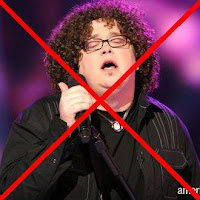

Though I never favored her to win, IMO Gina deserves to remain in the competition over Phil, Haley, Chris, and certainly Sanjaya. Her sometimes edgy vibe brought the appearance, if not the substance, of variety to an otherwise candy pop/soul pack. Goodbye, Gina. (-_-)
Curse you, Sanjaya Malakar! Get off the show and out of my subconscious!
Subscribe to:
Posts (Atom)